

Why Optical Lenses Should Only Be Cleaned with Specialized Cleaning Products
Anyone who invests in high-quality optics — whether binoculars, a spotting scope or a camera lens — does so deliberately for maximum image quality. Yet one crucial factor is frequently underestimated: proper lens care.
In everyday use, it is a common sight to see fogged or dirty lenses quickly wiped on a T-shirt, a paper tissue, or whatever cloth happens to be at hand. What seems practical in the moment can permanently reduce optical performance or even cause irreversible damage. Especially when using premium equipment — for birdwatching or digiscoping, for example — cleaning should therefore always be carried out with specially designed tools.
Why Optical Lenses Are Particularly Sensitive
Modern optical systems feature highly complex coatings on their lens surfaces. These ensure maximum light transmission, improved contrast, reduced reflections, accurate color reproduction and high image sharpness. The coatings themselves are extremely thin and sensitive — improper cleaning can damage or even remove them permanently. Once micro-scratches occur, they cannot be repaired.
Even the smallest damage leads to noticeable consequences: contrast drops, stray light enters the image, sharpness performance decreases, and the surface becomes prone to re-contamination. Image quality deteriorates gradually — often without the user ever identifying the true cause.
The Most Common Field Mistake: Cleaning with Clothing
Particularly in outdoor use, the same mistake is observed time and again: lenses wiped with a T-shirt or other clothing. Many guides and users are simply unaware of the consequences.
The problem is multi-layered. Clothing absorbs skin oils and sweat — when wiping, these are transferred onto the lens rather than removed. Fine dust and sand particles trapped in the fabric act like sandpaper on the sensitive surface. Without prior dust removal, contaminants are spread across the entire surface rather than lifted away. The result is micro-scratches that permanently reduce optical performance. In dusty environments, coastal areas or tropical regions with high humidity, this type of cleaning can cause visible damage in a very short time.
Why Improvised Cleaning Methods Are Also Problematic
Beyond clothing, users frequently reach for paper tissues, kitchen paper, standard household microfiber cloths, or regular glass and window cleaners — some simply breathe on the lens to create moisture. All of these methods can contain abrasive fibers, leave residues, attack lens coatings, spread grease rather than remove it, or cause scratches. Optical lenses are not window glass — they require specially developed materials and cleaning solutions.
The Correct Cleaning Sequence — and Why It Matters
Professional cleaning always follows a clear sequence that prevents scratches and ensures optimal results.
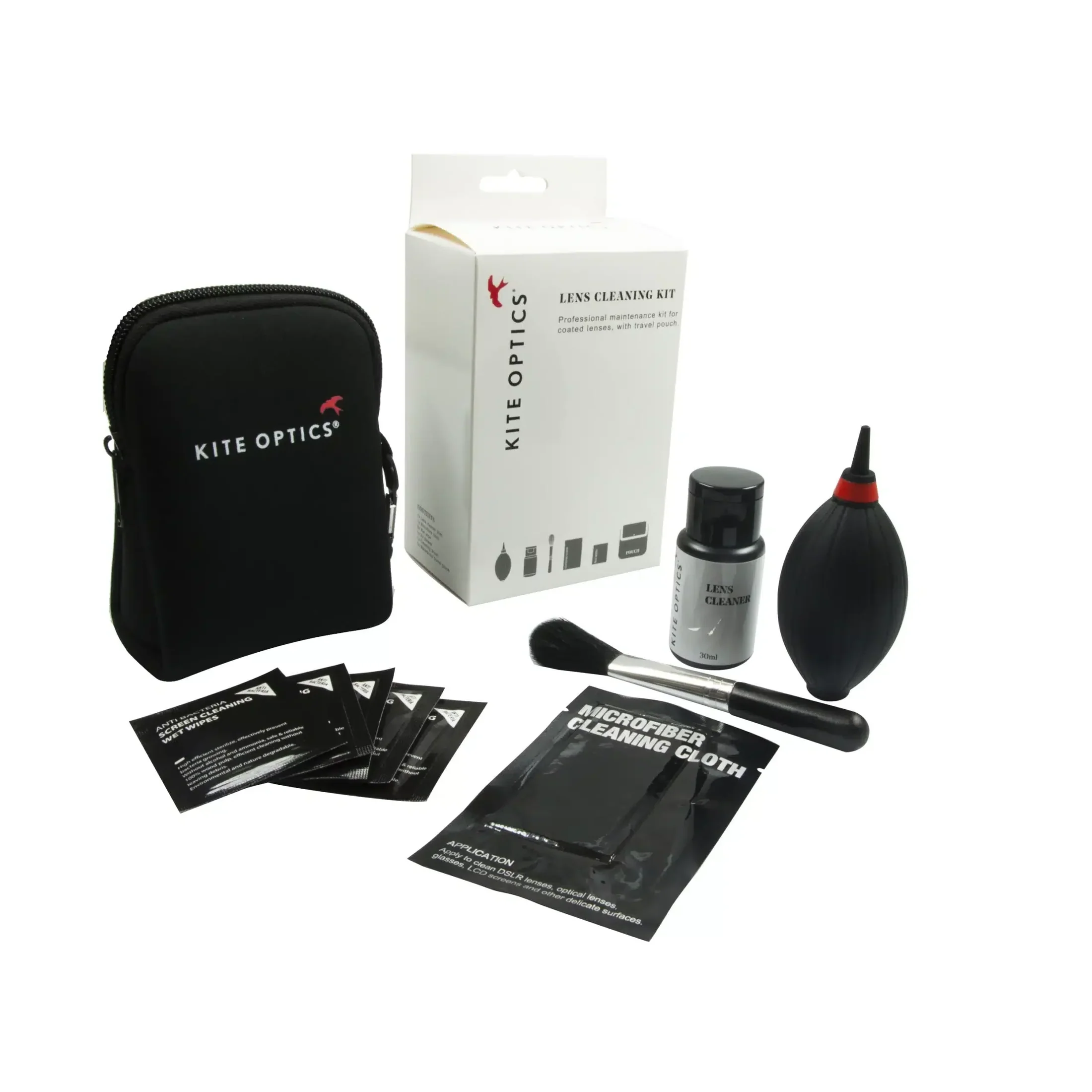
Step 1 — Dust removal with a blower: First, loose particles such as dust or sand must be removed without contact. Any rubbing while particles are still present can cause scratches — a blower eliminates them safely without touching the surface.
Step 2 — Fine particles removed with a cleaning brush: A specialist optical cleaning brush removes remaining particles that cling to the surface due to static charge. Only clean brushes specifically designed for optics should be used.
Step 3 — Cleaning spray for grease and residue: A specialist lens cleaning spray removes fingerprints, grease films, salt residue and moisture marks. Importantly, the spray is never applied directly to the lens — always onto the cleaning cloth first.
Step 4 — Microfiber cloth for optical surfaces: Only now should the lens be gently cleaned using a high-quality microfiber cloth designed for optics. These cloths are extremely soft, lint-free, non-abrasive and specifically developed for sensitive coatings.
Regular Maintenance Extends the Lifespan of Your Optics
High-quality binoculars and spotting scopes are long-term investments. With proper care, they can maintain their full performance for many years. Regular cleaning preserves resale value, protects lens coatings, improves the viewing experience and prevents costly damage. A good cleaning kit should therefore be considered essential equipment — just like a tripod or adapter.
Conclusion: Small Care — Big Difference
Cleaning optical lenses is not a minor task but essential for performance and longevity. Improvised methods can cause permanent damage even after a short time. Anyone who wants to protect their equipment and maintain the best possible image quality should use only specialized cleaning products and follow the correct cleaning sequence — especially in digiscoping, where even the smallest details become visible and the difference between well-maintained and damaged optics is immediately apparent